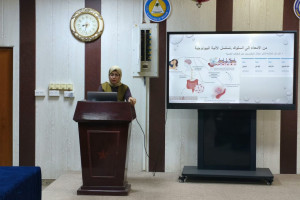
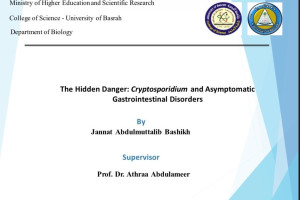
The College of Science at the University of Basrah organized a scientific seminar entitled “The Hidden Danger: Cryptosporidium and Asymptomatic Gastrointestinal Disorders”, presented by the Master student Jannat Abdulmuttalib Bashikh.
The seminar focused on Cryptosporidium, an intestinal protozoan parasite that can be transmitted through contaminated water and food, as well as direct contact with infected sources. Particular attention was given to asymptomatic infections, which may occur without obvious clinical signs while continuing to affect the intestinal mucosa and normal nutrient absorption.
The study aimed to explore the molecular and pathological mechanisms associated with asymptomatic Cryptosporidium infections, including the parasite’s interaction with intestinal epithelial cells and its effects on the intestinal barrier. It also highlighted the potential consequences of persistent infection, such as malabsorption, nutritional deficiencies, and growth impairment, particularly in children.
The seminar further addressed the parasite’s life cycle, transmission pathways, internal autoinfection, diagnostic methods, treatment options, and preventive strategies, emphasizing the importance of early detection and controlling the spread of this potentially silent infection.
Important News

viewed most