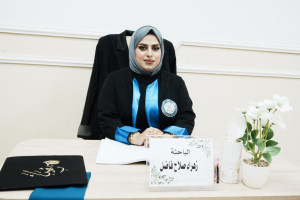
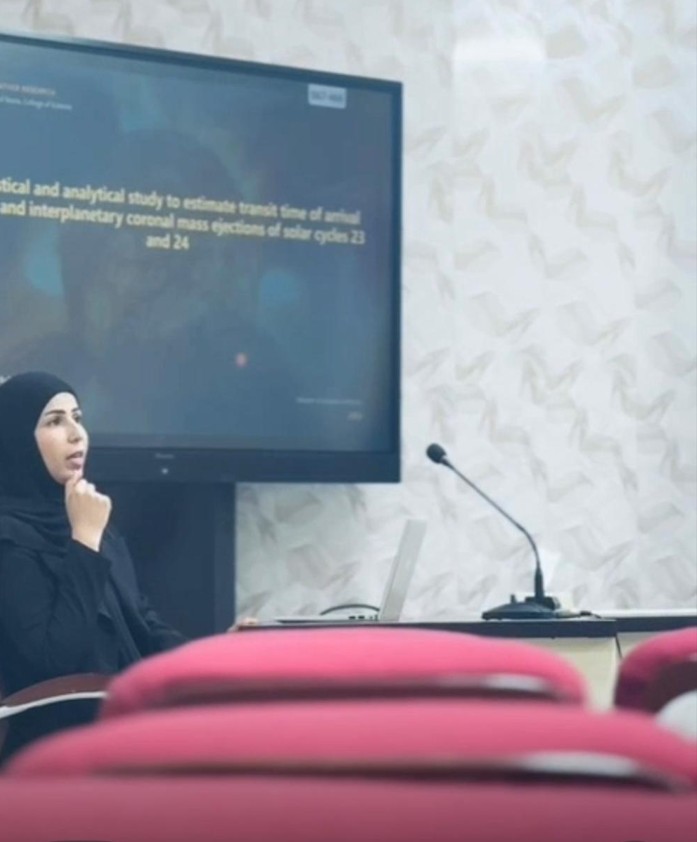
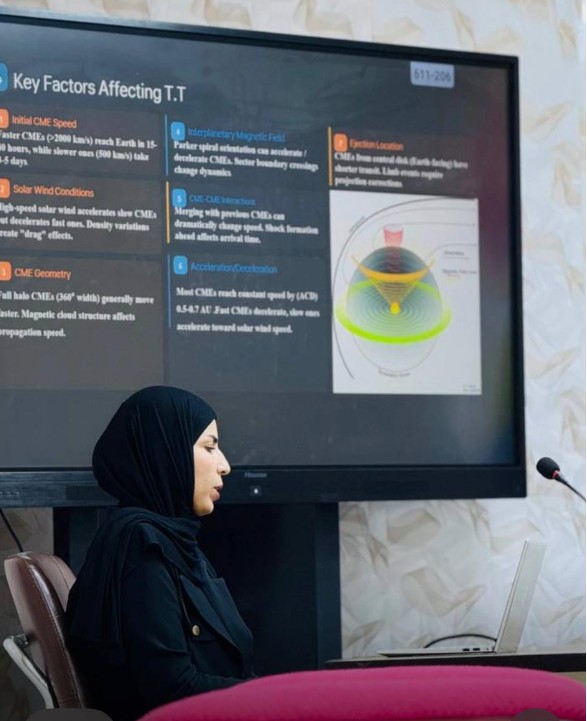

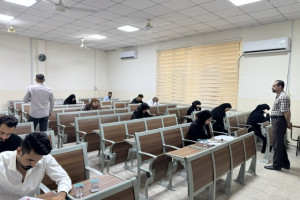
The Department of Physics at the College of Sciences, University of Basrah, organized a scientific seminar titled “A Statistical and Analytical Study on Estimating the Transit Time of Coronal Mass Ejections and Interplanetary Emissions During Solar Cycles 23 and 24,” presented by Huda Habib Abdul-Razzaq, a graduate student in the Department of Physics, and attended by several faculty members and graduate students from the department. The study aimed to analyze the physical characteristics of coronal mass ejections (CMEs) during their transit from the Sun to Earth, with a focus on estimating the transit time of these phenomena and their impact on space weather. The study relied on a statistical analysis of solar event data recorded during the 23rd (1996–2008) and 24th (2008–2019), based on data from solar observatories and satellites, such as SOHO/LASCO, ACE, and Wind, as well as a comparison of the empirical models used to predict the arrival time of these emissions on Earth. The study also addressed the relationship between the initial velocity of coronal mass ejections at the Sun and their transit time through the interplanetary medium, while analyzing the factors influencing their acceleration or deceleration during their propagation within the solar wind. The results highlighted the importance of this type of study in improving space weather prediction models and enhancing our understanding of the geophysical effects resulting from the arrival of coronal mass ejections in Earth’s magnetic field.
Important News
viewed most